
SEO that reports to
the revenue line
Rankings are a diagnostic, not an objective. This is how we connect technical foundations, entity architecture and intent mapping to CRM outcomes — and what we do when the numbers say the work is not landing.
What “revenue SEO” actually means
Revenue SEO is search work measured by the pipeline it produces rather than the positions it wins. It combines four things: technical health so pages can be crawled and rendered, entity architecture so machines understand what the business is, intent mapping so content matches buying stage, and CRM attribution so organic sessions can be traced to closed revenue.
Two reports about the same month
Both are accurate. Only one tells a CFO whether to keep funding the channel.
Activity, dressed as progress
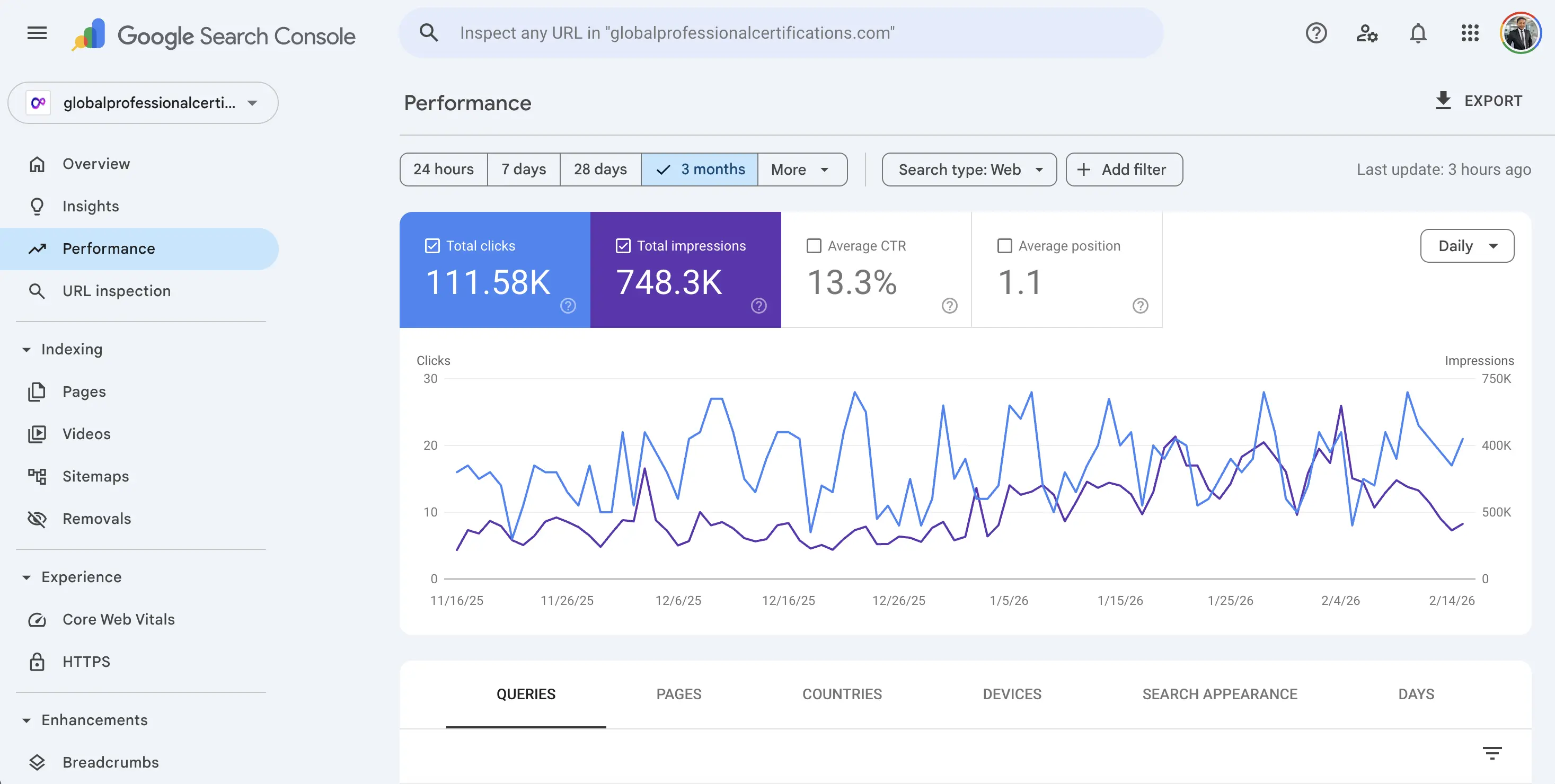
- “Impressions up 41% month over month”
- “18 keywords moved into the top 10”
- “Domain authority increased by 3 points”
- “Published 8 blog posts this month”
- “Fixed 214 technical errors”
None of these answer the only question that matters: did the company make money it would not otherwise have made?
Outcome, with the workings shown
- Organic-sourced SQLs, split by funnel entry point
- Pipeline value with organic as first touch
- Cost per SQL versus paid channels this quarter
- Commercial queries won and lost, named individually
- What we got wrong and what changes next month
Rankings still appear — beneath the revenue section, as the diagnostic they are.
Five pillars, built in sequence
Skipping ahead is the most common failure. Content investment on a site that cannot be crawled or understood is money spent on inventory nobody can find.
Technical and rendering foundation
Crawl budget, indexation control, canonical logic, JavaScript rendering, Core Web Vitals and log-file analysis. The unglamorous layer that determines whether anything else can work. We fix what blocks discovery before we write a word.
Entity and topical architecture
Making machines confident about what your company is, who it serves and which sources corroborate that. Consistent naming, an accurate Organization schema graph, resolved internal links between related concepts, and matching descriptions across third-party profiles.
Intent-mapped information architecture
Separating commercial decision content from educational content and giving each its own structure. Comparison and evaluation pages are engineered for conversion; top-of-funnel pages are engineered for entity reinforcement and internal link equity.
Information gain content
Every published page must add something not already available: original data, a named practitioner opinion, a worked example, a benchmark from real client work. Pages that only restate consensus get discounted by ranking systems and paraphrased by AI models.
Closed-loop attribution
First-touch organic stamped on the CRM contact record and carried to opportunity stage, so a session that starts a deal closed six months later still credits organic. Instrumented early, because attribution retrofitted at month nine cannot recover the history.
Every page gets one job
Pages that try to serve three funnel stages at once serve none of them. This is the assignment table we build during the audit.
| Intent tier | Query shape | Page type we build | Primary KPI | Secondary role |
|---|---|---|---|---|
| Decision | “[brand] vs [competitor]”, “[category] pricing” | Comparison & evaluation pages | Demo or trial starts | Answer capsule host |
| Evaluation | “best [category] for [segment]”, “how to choose” | Buyer guides with original criteria | Assisted conversions | Internal link hub |
| Discovery | “why does [problem] happen” | Explanatory articles with named expertise | Entity reinforcement | Newsletter capture |
| Validation | “is [brand] legit”, “[brand] reviews” | Case studies, proof, security pages | Deal-stage support | Third-party corroboration |
| Retention | “how to [do task] in [product]” | Documentation-grade how-to content | Support deflection | HowTo schema surface |
Most underperforming B2B sites we audit are over-invested in Discovery and almost empty at Decision and Validation — which is why they have traffic and no pipeline.
How we decide what goes first
Expected revenue per unit of effort, calculated openly, so the order can be argued with rather than accepted on faith.
Proximity beats volume
A page at position four on a query with buying intent moves faster and earns more than a technically perfect page targeting a term nobody buys from.
Blockers before builds
If a template renders client-side and never gets indexed, fixing it outranks every content idea in the backlog, regardless of how exciting the content idea is.
Compounding before one-offs
Work that improves every page — schema at template level, internal link architecture, entity consistency — is scheduled ahead of individual page rewrites.
Scoring model
Published- Commercial intent of the query
- ×3
- Current position (closer = higher)
- ×2.5
- Applies site-wide, not one page
- ×2
- Blocks other work if unfixed
- ×2
- Estimated effort (inverse)
- ÷ days
- Search volume
- ×0.5
Volume is weighted lowest deliberately. It is the metric most likely to lead a roadmap toward traffic that never converts.
Closing the loop
Analytics tells you a session happened. The CRM tells you whether it turned into money. The methodology only works if the two are joined.
Stamp first touch
Organic entry URL, query group and landing intent tier written to the contact record on first identified session.
Carry through stages
Fields persist as the contact becomes MQL, SQL and opportunity, so nothing is overwritten by the last channel touched.
Model multi-touch
Fractional credit across touchpoints in the CRM, not last-click in the analytics platform — which systematically undercounts organic.
Report to finance
Cost per SQL and pipeline per channel in a format a CFO recognises, refreshed monthly against a frozen baseline.
Attribution is directional, and we say so
Cookie restrictions, dark social, and buyers who research on a phone and convert on a laptop all leak signal. Multi-touch CRM attribution is the best available answer, not a precise one, and we present it with that caveat attached rather than implying certainty.
Methodology questions
What makes this different from standard SEO reporting?
The reporting line runs to revenue rather than stopping at rankings. Every tracked query is mapped to a funnel stage and a CRM outcome, so the monthly report answers whether organic produced qualified pipeline — not just whether positions improved. Rankings appear as a diagnostic, not as the headline.
What is entity architecture in practice?
It is the work of making a machine confident about what your company is, what it sells, who it serves and which sources corroborate that. Practically it means consistent naming, an accurate Organization schema graph, resolved internal linking between related concepts, and matching descriptions across the third-party profiles search engines already trust.
How do you prioritise what to fix first?
By expected revenue per unit of effort. A page already ranking fourth for a query with buying intent gets attention before a technically flawed page with no commercial audience. We publish the prioritisation logic with the audit so the sequence can be argued with rather than accepted on faith.
How long before organic SEO produces pipeline?
For established domains with existing authority, four to six months to meaningful pipeline contribution is typical, with technical and bottom-of-funnel wins arriving earlier. New domains generally take longer because trust signals have to accumulate first. We forecast a range at kickoff and revise it against observed velocity each quarter.
Do you still care about keyword rankings?
As a diagnostic, yes. Ranking movement is a fast signal that something is working or breaking, and it is available long before pipeline data accumulates. What we avoid is treating rankings as the objective, because it is entirely possible to rank well for queries that never produce revenue.
What is information gain and why do you insist on it?
Information gain is the amount a page adds that is not already available elsewhere. Search systems and AI models increasingly discount content that restates the consensus. Original data, a named practitioner opinion, a worked example or a benchmark from your own client base is what makes a page worth retrieving rather than paraphrasing.
How do you handle attribution when buyers touch many channels?
We use a multi-touch model in the CRM rather than last-click in the analytics platform. Organic entry points are stamped on the contact record at first touch and carried through to opportunity stage, so an organic session that starts a deal closed six months later by sales still shows up against organic.
Related material
Sources & references
- Google Search Central, “SEO Starter Guide” and Search Essentials documentation.
- Google Search Central, “Creating helpful, reliable, people-first content” — E-E-A-T framework.
- Google, Core Web Vitals thresholds — web.dev/vitals.
- Schema.org, Organization, Product and BreadcrumbList vocabulary specifications.
- Google Search Central, JavaScript SEO basics — rendering and indexation guidance.
- Oneskai internal protocol SEO-M v6, revised quarterly. Available to clients on request.
See where your organic actually leaks
A technical and commercial audit that maps every ranking page to an intent tier, identifies the Decision-stage gaps costing you pipeline, and returns a prioritised sequence with the scoring shown.